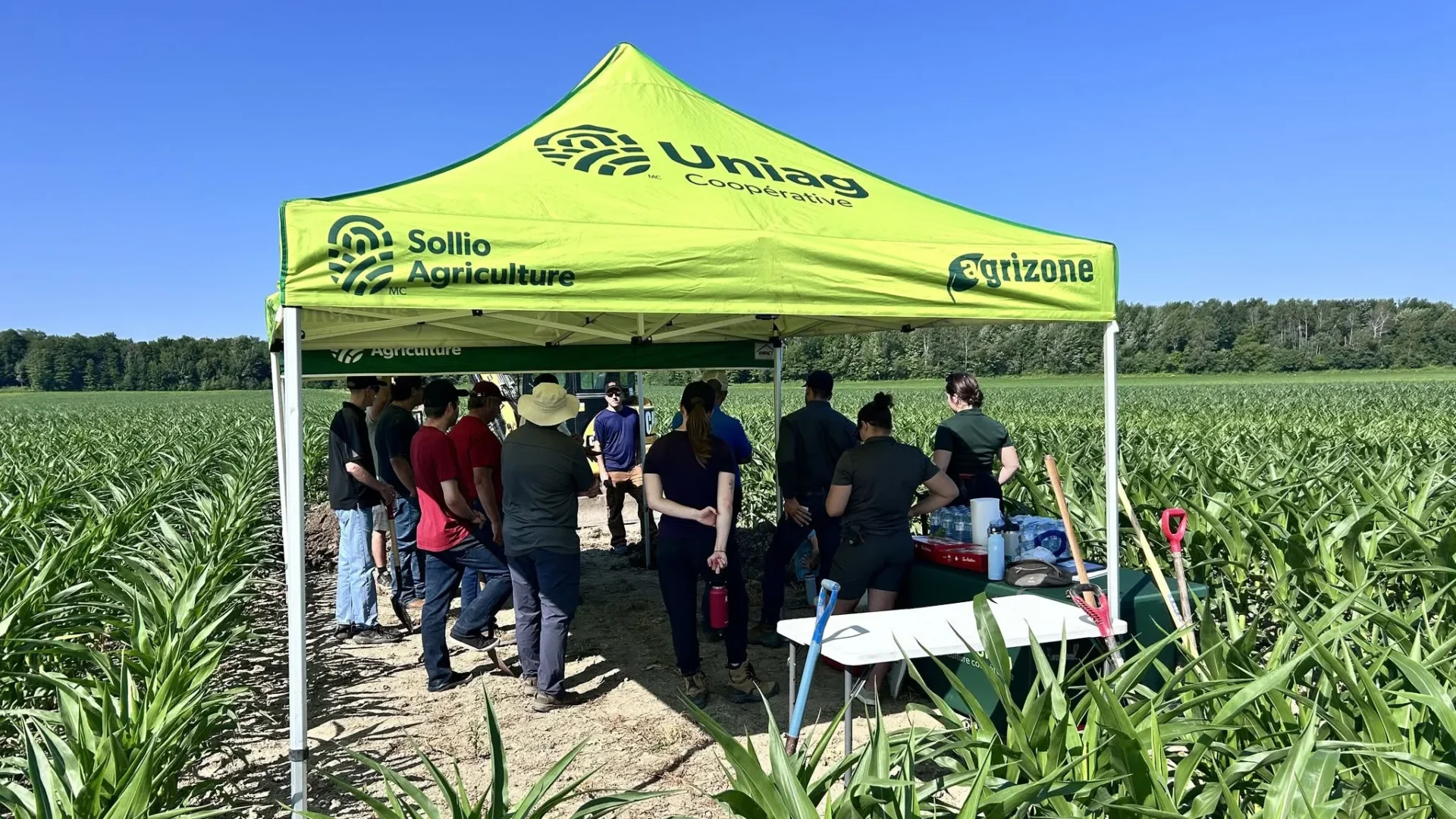


Column by Renaud Péloquin on the importance of photosynthesis for soil health and, ultimately, crop yields.
One word stood out to me at a soil health conference I attended last December. A simple, almost ordinary word—but one I had never really considered from this perspective: photosynthesis. It was Odette Ménard, an agronomist and passionate speaker on soil health, who placed it at the heart of her message.
With hindsight, I’m increasingly convinced that soil health begins with our ability to promote photosynthesis for as long as possible throughout the year. Every period when a field isn’t green represents a direct loss of solar energy—and therefore a loss of potential for the soil. In a context where every season counts and weather is becoming more unpredictable, these losses inevitably show up in yield stability and farm profitability.
It’s no coincidence that forests remain the ultimate example of healthy soil: plant diversity, continuous cover, and roots that are active year-round. Grasslands and perennial forage crops come close behind. On our farm, back when we still had cows and hay fields, we saw it year after year: corn planted after a hay field almost always showed strong yield potential. Despite variability, that field maintained remarkable consistency.
That’s where soil health truly matters: in stability. A field’s ability to perform even when conditions are far from ideal. In agriculture, we have to remember that we only get one chance per year. Just one. If you asked entrepreneurs to invest in a business that only has one opportunity to succeed each year, very few would agree. Yet that’s exactly what we do every spring.
On every farm, there is almost always one field that performs well, no matter the year. A well-drained soil, free of compaction, capable of both shedding excess water and retaining enough during dry periods. The ultimate goal is to bring all our fields closer to that level of consistency. And the key is neither a miracle product nor a universal recipe—it lies in soil health. A nourished, balanced soil where living roots are maintained as long as possible. From there, it’s about adopting consistent practices to preserve that balance.
That’s why I often say we are, first and foremost, risk managers. Our day-to-day reality is shaped by uncertainty: weather, markets, costs. Paradoxically, that risk can also hold us back from change. Adjusting practices is uncomfortable, especially when the risk is already high. But if we truly want to improve soil health, we need to be willing to do things differently.
Investing in soil health is not just another environmental expense—it’s an economic investment. It’s a strategy to reduce yield losses, stabilize income, and better withstand the impacts of increasingly unpredictable weather.
Soil health doesn’t guarantee a good year. But it greatly increases the chances of avoiding a bad one. And in agriculture, that’s often where profitability is determined.
This column was published in the March 2026 issue of le Coopérateur.